
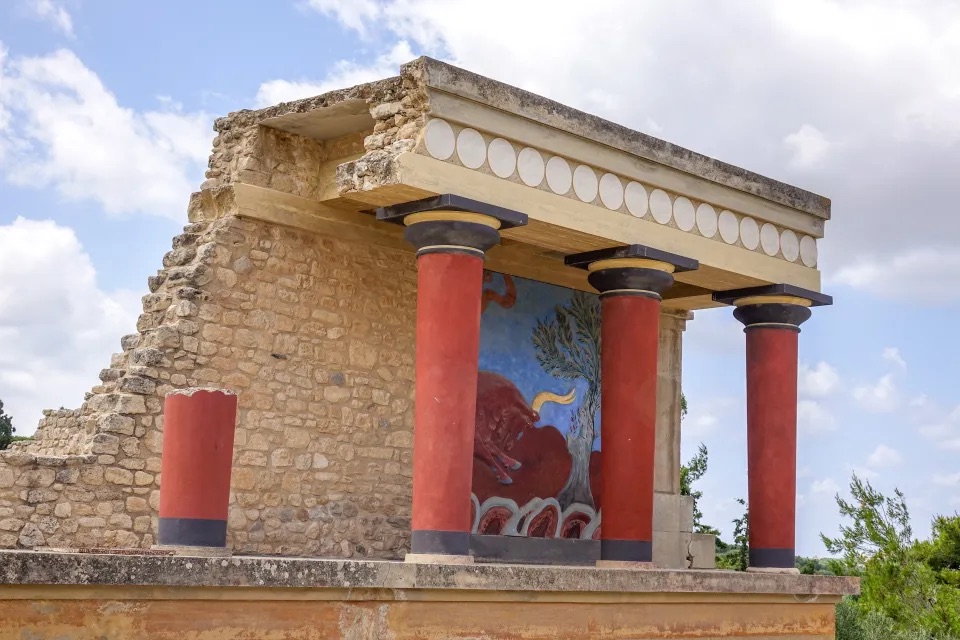
The world’s oldest known landfill is located in Knossos, on the island of Crete, Greece, and dates back to around 3,000 BCE. This landfill provides one of the earliest examples of waste management in human history. Archaeologists discovered it during excavations of the ancient Minoan civilization, which was highly advanced in urban planning and sanitation.
Key Features of the Knossos Landfill
1. Age: Estimated to be over 5,000 years old, making it a remarkable historical artifact.
2. Structure: The landfill consisted of pits dug into the ground to store refuse, including broken pottery, food remains, and other domestic waste.
3. Organization: Evidence suggests that waste disposal in Knossos was organized, indicating that the Minoans prioritized cleanliness and public health.
4. Environmental Awareness: This system highlights how ancient societies sought to manage waste responsibly, even without modern technologies.
Importance of the Knossos Landfill
• Urbanization and Waste Management: The landfill reflects the challenges of managing waste in densely populated areas, even in ancient times.
• Insights into Minoan Culture: The types of waste found in the landfill—such as pottery shards, bones, and tools—provide archaeologists with valuable information about the daily lives, diet, and activities of the Minoans.
• Historical Significance: This discovery underscores the long-standing human concern with waste management and its role in the development of cities.
Broader Context
Landfills have evolved significantly since the time of Knossos, but the fundamental concept of segregating and containing waste remains consistent. Modern landfills, for example, incorporate liners, leachate collection systems, and gas recovery mechanisms to minimize environmental impact. By studying ancient landfills like Knossos, archaeologists and historians gain perspective on humanity’s relationship with waste throughout history.
 SeaFoam-Greens: Lawn & Junk / SeaFoam Co.
Leave a comment